
Quick Summary
- Common, usually benign growths
- Linked to inflammation and hormones
- Often no symptoms at all
- Bleeding is the main sign
- Simple in-office removal available
What Causes Cervical Polyps? Symptoms, Risk Factors, and Treatment
Finding out you have a cervical polyp can be unsettling. I see this often in my office here in Chicago. A patient comes in for a routine Pap smear or pelvic exam, feeling perfectly healthy, and suddenly hears, “You have a cervical polyp.” The first reaction is almost always the same. “Is it cancer?” The good news is that cervical polyps are very common, affecting an estimated 2% to 5% of women, and the vast majority are completely benign. Most never become something serious. Even so, they deserve proper evaluation because they can cause symptoms such as unexpected bleeding, and every removed polyp should be examined under a microscope to confirm it’s harmless. If you’ve recently been told you have one—or you’ve been experiencing unexplained bleeding—this guide will help you understand what cervical polyps are, why they develop, what symptoms to watch for, and what treatment usually involves.
What Is a Cervical Polyp?
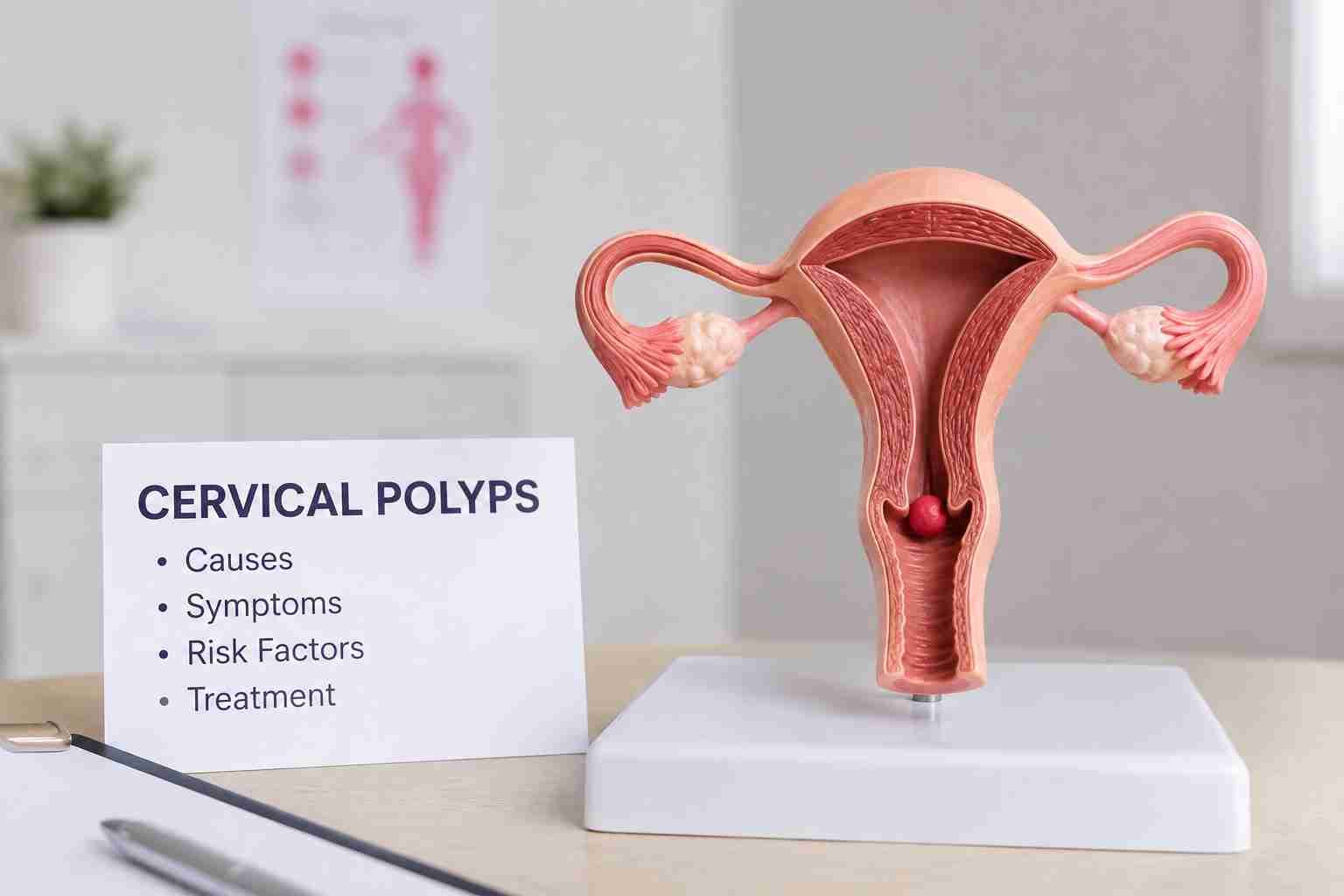
Your cervix is the lower portion of the uterus that connects to the vagina. The opening in the middle is called the cervical canal, and this is where cervical polyps typically develop. A cervical polyp is a small growth that extends from the surface of the cervix. Most are soft, smooth, and attached by a thin stalk. They may appear reddish-purple or grayish-white depending on their blood supply.
There are two main types:
- Endocervical polyps, which grow from the cervical canal and are the most common type.
- Ectocervical polyps, which develop on the outer surface of the cervix.
Although hearing the word “growth” can sound frightening, cervical polyps are rarely cancerous. Still, I recommend that any polyp removed be sent to a laboratory for evaluation. This is standard practice and helps ensure we’re not missing anything important.
What Causes Cervical Polyps?
One question I hear all the time is, “Why did this happen to me?” The truth is, we don’t always know the exact reason. Researchers believe several factors may contribute to the development of cervical polyps, including:
- Chronic inflammation of the cervix
- Changes in estrogen levels
- Small blood vessels in the cervix becoming blocked
- Ongoing irritation or infection affecting cervical tissue
In many women, there isn’t one clear explanation. Sometimes polyps simply develop without an obvious trigger. That uncertainty can be frustrating, but it doesn’t usually mean there’s an underlying serious disease.
What Are the Signs of Cervical Polyps?
Interestingly, most cervical polyps don’t cause any symptoms at all. Many women only learn they have one during a routine gynecologic examination or while having a Pap smear. When symptoms do occur, bleeding is the most common sign.
You may notice:
- Spotting between menstrual periods
- Bleeding after sexual intercourse
- Bleeding after menopause
- Menstrual periods that seem heavier than usual
- Vaginal discharge that may be white, yellow, or occasionally have an unpleasant odor if infection is present
If you’ve already gone through menopause, any vaginal bleeding should be evaluated promptly . Most cases are not caused by cancer, but it’s never something I recommend ignoring.
Are These Symptoms Always Caused by a Cervical Polyp?
Not necessarily. This is why an examination is so important.
Bleeding can also be caused by:
- Uterine fibroids
- Vaginal or cervical infections
- Hormonal changes
- Cervical dysplasia (abnormal cervical cells)
- Changes inside the uterus, such as endometrial polyps
Without looking at the cervix, it’s impossible to know the exact cause. I often tell my patients not to spend weeks trying to diagnose themselves online. If something doesn’t seem normal for your body, let your gynecologist evaluate it. Sometimes the explanation is simple. Occasionally, it requires further testing. Either way, you’ll have answers.
Who Is More Likely to Develop Cervical Polyps?
Cervical polyps can occur in women of different ages, but they’re more common during the years leading up to menopause.
Risk appears to be higher in women who:
- Are in their 40s or 50s
- Have had more than one pregnancy
- Have ongoing cervical inflammation
- Have experienced repeated cervical infections
They are uncommon before puberty and relatively rare after menopause in women who aren’t using estrogen therapy. Even if you don’t fit into any of these categories, though, it’s still possible to develop a cervical polyp.
How Are Cervical Polyps Diagnosed?
Most cervical polyps are easy to identify during a routine pelvic examination. During your visit, I’ll examine the cervix using a speculum—the same instrument used during a Pap smear. If a polyp is present, it’s often visible immediately.
Depending on your symptoms, I may also recommend additional testing, such as:
- A Pap test if you’re due for screening
- A colposcopy, which uses a magnified view of the cervix
- A biopsy if any area appears unusual
Additional testing doesn’t automatically mean something is wrong. It simply helps make sure we’re getting a complete picture of your cervical health.
How Are Cervical Polyps Removed?
The procedure is usually much easier than patients expect. Most cervical polyps can be removed during an office visit in just a few minutes. After examining the cervix, I gently grasp the polyp with a specialized instrument called ring forceps. A slow twisting motion usually allows the polyp to separate from the cervix safely.
Most women describe the sensation as:
- Mild cramping
- Brief pinching
- Temporary pressure similar to a Pap smear
After removal, you may notice:
- Light spotting
- Mild cramping for a few hours
- Minimal discomfort
Nearly everyone returns to normal activities the same day. Every removed polyp is sent to a pathology laboratory for evaluation. This is done routinely, even when it appears completely benign. If you experience heavy bleeding, fever, severe pain, or foul-smelling discharge afterward, you should contact your healthcare provider promptly.
Can Cervical Polyps Come Back?
Yes. Although recurrence isn’t common, it can happen. Having one cervical polyp doesn’t necessarily mean you’ll develop another, but routine gynecologic care remains important. Regular pelvic examinations and Pap smears help identify new growths early and ensure your cervix stays healthy. The reassuring news is that cancer developing within a cervical polyp is extremely uncommon. The laboratory examination performed after removal helps confirm exactly what type of tissue was present and whether any additional treatment is needed.
Why You Shouldn’t Ignore Unexplained Bleeding
One of the most important messages I try to share with my patients is this: Your body deserves attention. Unexpected bleeding doesn’t always signal something serious, but it’s your body’s way of asking for a closer look. The sooner we evaluate the cause, the sooner we can provide reassurance—or treatment if it’s needed. If you’ve been told you have a cervical polyp, or you’ve noticed bleeding after intercourse, spotting between periods, or bleeding after menopause, I’d encourage you to schedule an appointment rather than waiting to see if it goes away on its own. Most cervical polyps are simple to treat. Getting answers can give you peace of mind and help protect your long-term reproductive health.
Frequently Asked Questions
Can cervical polyps go away on their own?
Small cervical polyps without symptoms may occasionally be monitored, but many healthcare providers recommend removal so the tissue can be examined and the diagnosis confirmed.
Are cervical polyps a sign of cancer?
No. The overwhelming majority are benign. Laboratory testing after removal is a routine precaution rather than an indication that cancer is expected.
Does removing a cervical polyp hurt?
Most women experience only mild cramping or a brief pinching sensation during removal. The procedure is usually completed in just a few minutes.
Can cervical polyps affect fertility or pregnancy?
Most cervical polyps don’t interfere with fertility. If a polyp is found during pregnancy, your gynecologist will decide whether monitoring or treatment is the safest approach based on your individual situation.
How soon can I return to normal activities after polyp removal?
Most patients resume their usual routine the same day. Mild spotting or light cramping for a day or two is common and usually resolves without treatment.