
Quick Summary
Seeing a positive pregnancy test can bring a rush of emotions. Excitement. Surprise. Maybe some nervousness too. Then you notice spotting. Or a strange pain on one side of your lower abdomen. Naturally, your mind starts racing. I often tell my patients that some mild cramping and spotting can happen in early pregnancy and doesn’t automatically mean something is wrong. But there are certain symptoms we take seriously because they can be signs of an ectopic pregnancy. An ectopic pregnancy happens when a fertilized egg implants somewhere outside the main cavity of the uterus. It occurs in roughly 1% to 2% of pregnancies , and importantly, many women who develop one don’t have an obvious risk factor. That’s why knowing the warning signs matters.
Where Does an Ectopic Pregnancy Happen?
More than 90% of ectopic pregnancies develop in a fallopian tube, which is why you may also hear the term tubal pregnancy. The fallopian tubes are the narrow pathways an egg normally travels through before reaching the uterus. They aren’t designed to support a growing pregnancy. As an ectopic pregnancy gets larger, the tube can eventually rupture and cause internal bleeding. Much less commonly, an ectopic pregnancy may implant in the:
- Ovary
- Cervix
- Abdominal cavity
- Scar from a previous C-section
Unfortunately, an ectopic pregnancy can’t develop normally or be moved into the uterus. Once it’s diagnosed, treatment is necessary.
What Are the Early Warning Signs of Ectopic Pregnancy?
Here’s what makes ectopic pregnancy tricky: at first, you may feel completely normal. You may miss your period, have breast tenderness, feel tired or nauseated, and get a positive home pregnancy test. In other words, it can feel exactly like any other early pregnancy. Symptoms often develop as the pregnancy progresses.
Watch for these signs:
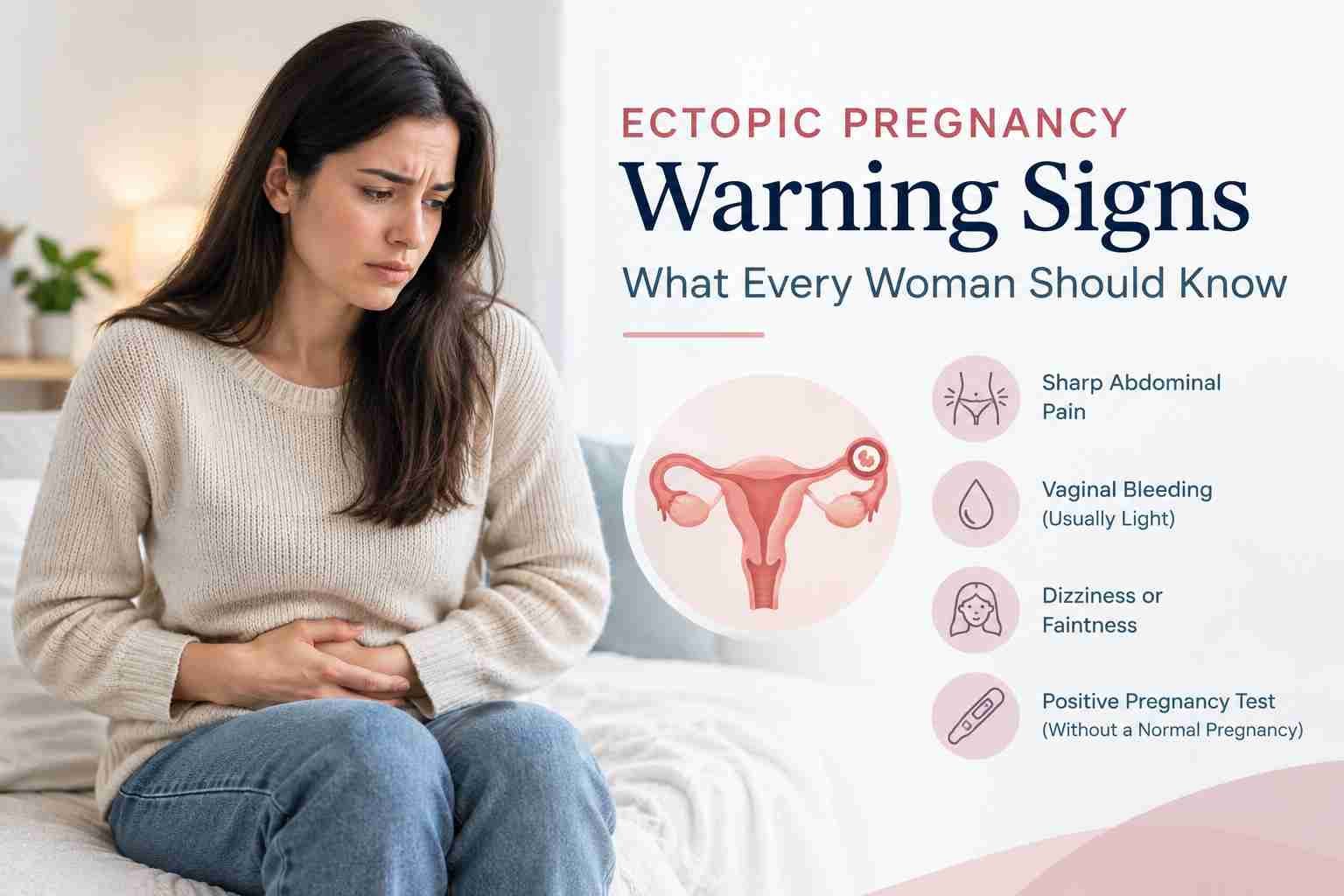
- Pain on one side of the pelvis or lower abdomen. It may begin as a dull ache and become sharper or more persistent.
- Unusual vaginal bleeding or spotting. This may look different from your usual period.
- Shoulder-tip pain. This one surprises many patients. Pain near the tip of the shoulder can sometimes occur when internal bleeding irritates the diaphragm.
- Dizziness, weakness, or lightheadedness.
- Pressure or discomfort around the rectum , sometimes creating the sensation that you need to have a bowel movement.
Having one of these symptoms doesn’t automatically mean you have an ectopic pregnancy. There are other possible explanations. Still, early pregnancy plus unusual pain or bleeding deserves a call to your healthcare provider.
When Does an Ectopic Pregnancy Become an Emergency?
A ruptured ectopic pregnancy can cause severe internal bleeding. This is a medical emergency.
Go to the emergency room immediately if you experience:
- Sudden, severe abdominal or pelvic pain
- Fainting or feeling as though you’re about to faint
- Severe weakness, dizziness, confusion, or other signs of shock
- Significant bleeding accompanied by severe abdominal pain
- Shoulder-tip pain together with abdominal or pelvic pain
Don’t wait until the next morning. Don’t wait for an office appointment. Call 911 or seek emergency medical care.
Who Has a Higher Risk of Ectopic Pregnancy?
An ectopic pregnancy can happen without any known risk factors. Still, certain circumstances increase the likelihood.
Risk factor & Why it matters
- Previous ectopic pregnancy : Having had one increases the chance of another.
- Previous PID, chlamydia, or gonorrhea : These infections can cause inflammation and scarring in the fallopian tubes.
- Previous tubal or pelvic surgery : Surgery may change or scar the fallopian tubes.
- Pregnancy with an IUD in place : Pregnancy with an IUD is uncommon, but if pregnancy occurs, ectopic pregnancy needs to be ruled out.
- Fertility treatment : Some assisted reproductive treatments are associated with an increased ectopic pregnancy risk.
- Smoking : Smoking is associated with impaired fallopian-tube function and higher ectopic pregnancy risk.
- Endometriosis : Endometriosis may affect pelvic anatomy and the fallopian tubes.
- Age 35 or older : Ectopic pregnancy becomes somewhat more common with increasing maternal age.
If any of these apply to you, tell your OB/GYN as soon as you know you’re pregnant.
How Do We Diagnose an Ectopic Pregnancy?
This usually isn’t something we determine from one symptom—or necessarily from one test. We put several pieces together.
- We check your hCG level : Human chorionic gonadotropin, or hCG , is the pregnancy hormone measured by pregnancy tests. Sometimes we check the level and repeat the blood test about 48 hours later. The pattern of change can give us information about how the pregnancy is developing, although hCG results alone can’t tell us exactly where the pregnancy is located.
- We perform a transvaginal ultrasound: A transvaginal ultrasound gives us a close view of the uterus, ovaries, fallopian-tube areas, and surrounding pelvis. We’re looking for evidence of a pregnancy inside the uterus and for findings that could suggest an ectopic pregnancy. Very early pregnancies may simply be too small to see yet. In those situations, repeat blood work and ultrasound may be needed.
- We consider your symptoms and examination
Pain location, bleeding, medical history, vital signs, and pelvic examination findings all help us decide what needs to happen next. Sometimes monitoring takes a little time. I know that waiting can be stressful. But careful follow-up is extremely important when the pregnancy location isn’t yet clear.
How Is an Ectopic Pregnancy Treated?
Treatment depends on how early the pregnancy is detected, your symptoms, hCG levels, ultrasound findings, and whether there’s evidence of internal bleeding.
- Methotrexate : For some early, unruptured ectopic pregnancies, a medication called methotrexate may be an option. It stops the pregnancy tissue from continuing to grow so the body can gradually absorb it. Follow-up blood tests are necessary until hCG falls appropriately.
- Laparoscopic surgery : If medication isn’t appropriate, minimally invasive surgery may be recommended. Small incisions are made in the abdomen so the ectopic pregnancy can be removed. Depending on the condition of the affected fallopian tube, the surgeon may be able to preserve it, or removal of the tube may be necessary.
- Emergency surgery : If the fallopian tube has ruptured and there’s significant internal bleeding, emergency surgery may be required. Speed matters here. The immediate goal is to control bleeding and protect the mother’s health.
Can I Still Have a Healthy Pregnancy After an Ectopic Pregnancy?
Yes. Many women do. Future fertility depends on several factors, including the health of your fallopian tubes, the reason the ectopic pregnancy occurred, and the treatment that was needed. Even with one fallopian tube, natural pregnancy can still be possible. After a previous ectopic pregnancy, though, I recommend contacting your OB/GYN early with your next positive pregnancy test. We can arrange appropriate hCG monitoring and an early ultrasound to confirm that the pregnancy is developing inside the uterus. Don’t Feel Like You Have to Wait Until Eight Weeks. A lot of women assume they’re supposed to get a positive pregnancy test and simply wait for their first prenatal appointment. That’s not always the best plan. If you’re having pain or bleeding—or you’ve previously had an ectopic pregnancy, pelvic infection, tubal surgery, or fertility treatment—call earlier.
Here in the Chicago and Barrington area, I see patients who aren’t sure whether an early symptom is “normal enough” to wait. My advice is simple: you don’t need to make that decision alone. Call your gynecologist and describe what’s happening. We can decide whether you need monitoring, an ultrasound, an office evaluation, or emergency care.
Key Things I Want You to Know
Ectopic pregnancy occurs when a pregnancy implants outside the main uterine cavity. Most ectopic pregnancies occur in a fallopian tube. Early symptoms can look exactly like a normal pregnancy. One-sided pelvic pain and unusual bleeding deserve medical attention. Severe abdominal pain, fainting, or shoulder-tip pain with abdominal pain may indicate internal bleeding and require emergency care. Early diagnosis can sometimes allow treatment before rupture occurs. If you’ve recently had a positive pregnancy test and are experiencing unusual pain or bleeding, please don’t try to diagnose the problem yourself. Contact your OB/GYN. If symptoms are severe, seek emergency care immediately. For non-emergency concerns or early pregnancy evaluation, you can schedule an appointment with Dr. Shehrebanu Merchant to discuss your symptoms and determine what testing may be appropriate.
Frequently Asked Questions
Can I have an ectopic pregnancy and still feel completely normal?
Yes. During the earliest stages, an ectopic pregnancy may feel exactly like a typical pregnancy. Symptoms such as bleeding or one-sided pelvic pain may develop later.
How soon can an ectopic pregnancy be detected?
It can sometimes be identified within the first several weeks of pregnancy using a combination of serial hCG blood tests and transvaginal ultrasound. The exact timing varies, and repeat testing may be necessary when it’s simply too early to see the pregnancy clearly.
Does having one ectopic pregnancy mean I’ll have another?
No. Many women go on to have pregnancies inside the uterus. However, a previous ectopic pregnancy does increase your risk of another one, so early monitoring during future pregnancies is recommended.
Can I get pregnant naturally after an ectopic pregnancy?
Often, yes. Your chances depend partly on the health of your remaining fallopian tube or tubes and whether there are other fertility concerns.
Is shoulder pain really a warning sign?
It can be. Shoulder-tip pain associated with significant abdominal or pelvic pain, weakness, dizziness, or fainting can occur with internal bleeding from a ruptured ectopic pregnancy. Seek emergency medical care if you’re experiencing these symptoms.