
Quick summary
- Side offers clues, not answers
- Ovulation pain is usually harmless
- Sudden severe pain needs the ER
- Bowel and appendix mimic ovaries
- Pain diary speeds up diagnosis
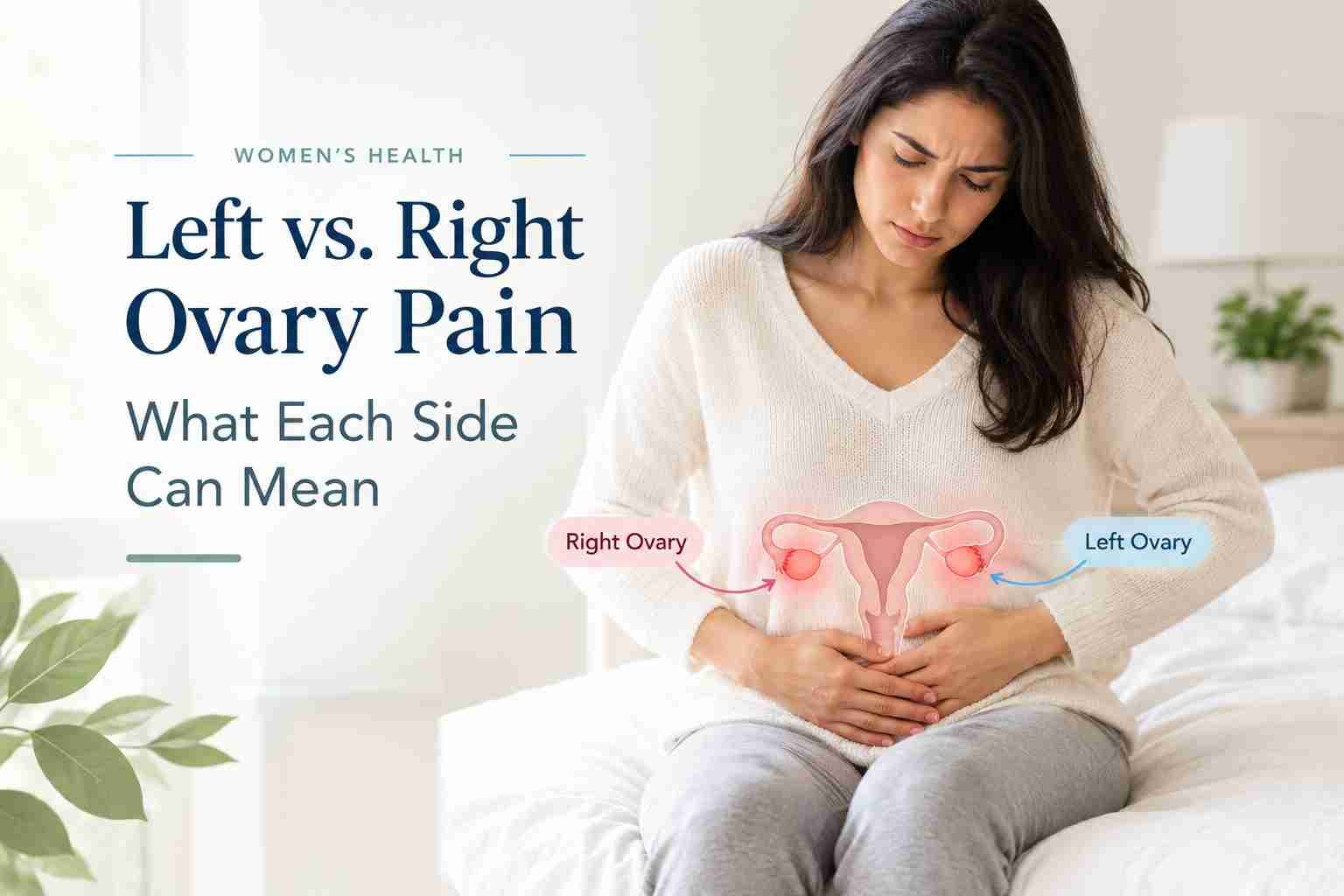
You’re relaxing at home in Lake Barrington when you notice a dull ache low on the right side of your abdomen. At first, you ignore it. Maybe it’s gas. Maybe your period is coming. But then the discomfort returns, and you start wondering whether something is wrong with your ovary. You might even search online to find out whether pain on the left side means something different from pain on the right. Here’s what I often explain to my patients: the side of your pelvic pain can give us clues, but it doesn’t tell us exactly what’s causing it. Right-sided pain isn’t automatically an ovarian cyst. Left-sided pain doesn’t necessarily mean something is wrong with your left ovary. What matters more is when the pain happens, how intense it feels, how long it lasts, and whether you’re experiencing other symptoms. Let’s look at what each side might be telling you.
Why the Side of Your Pain Only Tells Part of the Story
Your ovaries sit deep inside your pelvis, surrounded by several other organs. On the right, there’s your appendix and part of your intestine. On the left, there’s your bowel, including the sigmoid colon. Your bladder and the tubes that carry urine from your kidneys are nearby, too. That’s a lot of structures sharing a relatively small space. And here’s the tricky part. Pain from internal organs isn’t always felt exactly where the problem begins. You might feel discomfort near your right ovary when the actual cause is your appendix. Or you may assume your left ovary is hurting when constipation is responsible. That’s why I don’t diagnose pelvic pain based on location alone. I look at your menstrual cycle, medical history, accompanying symptoms, pelvic examination, and ultrasound findings when imaging is needed.
Left vs. Right Ovary Pain: A Quick Comparison
| Where You Feel Pain | Possible Ovary-Related Causes | Other Conditions That Can Feel Similar |
| Right side | Ovulation pain, ovarian cyst, ovarian torsion, ectopic pregnancy | Appendicitis, kidney stones, bowel problems |
| Left side | Ovulation pain, ovarian cyst, endometrioma, ovarian torsion, ectopic pregnancy | Constipation, diverticulitis, kidney stones |
| Either side or both | Endometriosis, ovarian cysts, pelvic inflammatory disease | Fibroids, bladder conditions, bowel disorders, pelvic muscle pain |
Notice something? Several conditions appear on both sides. That’s because most ovarian problems aren’t exclusive to one ovary. The location helps us narrow down the possibilities, but it doesn’t confirm a diagnosis.
Right-Sided Ovary Pain: What Could Be Causing It?
Right-sided pelvic pain is fairly common, and there are several possible explanations.
- Ovulation pain – Some women experience a brief ache or sharp sensation around the middle of their menstrual cycle. This is called mittelschmerz, which simply means ovulation pain. It happens around the time an ovary releases an egg. You may feel it on the right side one month and the left side another month. The discomfort usually lasts anywhere from a few minutes to a day or two. If it’s mild, predictable, and goes away on its own, it’s often harmless.
- A functional ovarian cyst – Functional cysts develop as part of the normal menstrual cycle. Most disappear without treatment. Occasionally, a cyst grows large enough to cause pressure, aching, or discomfort on one side. A cyst can also rupture, causing sudden pain. If the pain becomes severe, don’t assume it’s just a harmless cyst.
- Ovarian torsion – This is one condition I never want patients to ignore. Ovarian torsion happens when an ovary twists around the tissues supporting it, potentially restricting its blood supply. It usually causes sudden, severe pelvic pain, often with nausea or vomiting. Torsion appears to occur somewhat more frequently on the right side, although it can happen on either side. Suspected ovarian torsion requires emergency evaluation.
- Appendicitis – Appendicitis is one of the most important conditions to consider with right-sided lower abdominal pain. The pain may begin near your belly button before moving toward the lower right abdomen. Nausea, vomiting, loss of appetite, and fever may follow. Because the appendix sits close to the right ovary, appendicitis can sometimes feel like gynecological pain. It needs prompt medical attention.
- Ectopic pregnancy – If pregnancy is possible, we also need to consider an ectopic pregnancy. This happens when a pregnancy develops outside the uterus, most often in a fallopian tube. It may cause one-sided pelvic pain, vaginal bleeding, dizziness, or shoulder pain. A ruptured ectopic pregnancy can cause life-threatening internal bleeding. If you have severe pelvic pain and a positive pregnancy test—or a missed period with possible pregnancy—seek emergency care.
Left-Sided Ovary Pain: What Could Be Causing It?
Many causes of left-sided pelvic pain overlap with those on the right. But a few other conditions are worth considering.
- Ovarian cysts – Just like the right ovary, the left ovary can develop functional cysts. These may cause a dull ache, pressure, or occasional sharp pain. If a cyst ruptures or the ovary twists, the pain may become sudden and severe.
- Endometriomas – An endometrioma is a type of ovarian cyst associated with endometriosis. Endometriosis occurs when tissue similar to the uterine lining grows outside the uterus. Endometriomas can cause persistent pelvic discomfort, painful periods, and pain during intercourse. They can develop on either ovary. If your pain repeatedly worsens around your period, I may want to investigate whether endometriosis is contributing.
- Constipation and bowel discomfort – Your sigmoid colon sits in the lower left part of your abdomen. When stool or gas builds up, it can create pressure and cramping that feels surprisingly similar to ovarian pain. You may also notice bloating or changes in bowel movements. Pain that improves after passing stool or gas may point toward a digestive cause, although that alone doesn’t confirm it.
- Diverticulitis – Diverticulitis occurs when small pouches in the colon become inflamed. It often causes pain in the lower left abdomen, particularly in middle-aged and older adults. Fever, nausea, and changes in bowel habits may accompany the pain. Because diverticulitis can require medical treatment, persistent or worsening left-sided abdominal pain shouldn’t be dismissed.
- Kidney stones – A kidney stone can cause sharp pain that travels from the back or side toward the lower abdomen or groin. You may also experience nausea, urinary discomfort, or blood in your urine. The pain can be intense and may come in waves.
What If the Pain Switches Sides or Happens on Both?
Patients sometimes tell me, “Last month it was on the left. This month it’s on the right. Is that normal?” Sometimes, yes. Ovulation can occur from either ovary, so mid-cycle discomfort may change sides between cycles. However, ovulation doesn’t follow a strict left-right alternating schedule. Pain on both sides may have other explanations. For example, endometriosis can cause widespread pelvic discomfort rather than pain in one specific location. Pelvic inflammatory disease, or PID, can also cause pain across the lower abdomen. If pelvic pain comes with fever, unusual vaginal discharge, or pain during intercourse, an infection needs to be considered. And when pelvic pain continues or repeatedly returns for three months or longer, we may begin evaluating it as chronic pelvic pain. That doesn’t necessarily mean something dangerous is happening. It means we need to look beyond a single menstrual cycle.
When Does the Pain Happen? Timing Can Tell Us a Lot
One of the most useful things you can do before your appointment is notice when the discomfort appears.
| When the Pain Happens | What It Might Suggest |
| Around the middle of your cycle | Ovulation pain |
| Before or during your period | Menstrual cramps, endometriosis, or another gynecological condition |
| During or after intercourse | Ovarian cysts, endometriosis, pelvic floor problems, or infection |
| Constant or recurring over several weeks | Persistent cysts, endometriosis, or non-gynecological causes |
| Suddenly and severely | Ovarian torsion, cyst rupture, ectopic pregnancy, appendicitis, or another emergency |
These are possibilities, not diagnoses. Still, knowing the timing can help us decide what to investigate first.
Red Flags: When You Shouldn’t Wait for an Appointment
Most mild pelvic discomfort isn’t an emergency. But certain symptoms change the situation.
Go to the ER if you experience:
- Sudden, severe pelvic or abdominal pain
- Severe pain with repeated vomiting
- Fever of 100.4°F (38°C) or higher with significant pelvic pain
- Fainting, severe dizziness, or unusual weakness
- Pelvic pain with a positive pregnancy test or possible pregnancy
- Heavy vaginal bleeding, especially with dizziness or weakness
These symptoms may indicate ovarian torsion, a ruptured ovarian cyst with internal bleeding, ectopic pregnancy, appendicitis, or another condition requiring urgent care. For women in Lake Barrington and surrounding communities, Advocate Good Shepherd Hospital is one nearby emergency care option. However, the nearest appropriate emergency department is generally the best choice when symptoms are severe. And if you’re feeling faint or extremely unwell, please don’t drive yourself. Call 911.
What Happens During an Appointment With Me?
When you visit my office for recurring pelvic pain, I want to understand the full picture. Not just which side hurts. I’ll ask when the pain started, whether it follows your menstrual cycle, how severe it becomes, and whether you’ve noticed changes in bleeding, urination, or bowel movements. Depending on your symptoms, the evaluation may include:
- A pelvic examination
- A pregnancy test when pregnancy is possible
- A pelvic or transvaginal ultrasound
- Urine testing
- Blood tests
- Testing for vaginal or sexually transmitted infections when appropriate
Sometimes the examination and history give us a fairly clear direction. Other times, we need imaging or additional testing. Keep a simple pain diary. If your pain comes and goes, I recommend writing down four things:
- Date: When did it happen?
- Cycle day: Where were you in your menstrual cycle?
- Location: Left, right, or both sides?
- Pain score: How severe was it on a scale of 1 to 10?
You can also note how long the pain lasted and whether you experienced bleeding, nausea, or bowel symptoms. You don’t need a complicated tracking app. A note on your phone works perfectly well. For mild ovulation-related discomfort or an uncomplicated cyst, treatment may involve observation and appropriate pain relief. But treatment depends on the diagnosis. Persistent pain, suspected infection, or concerning imaging findings may require a different approach.
Key Takeaways
- Left-sided and right-sided pelvic pain have many overlapping causes.
- Mild, predictable mid-cycle discomfort may be related to ovulation.
- Ovarian cysts, endometriosis, bowel conditions, and urinary problems can all cause one-sided pain.
- Sudden severe pain, especially with vomiting, fainting, fever, or possible pregnancy, requires emergency evaluation.
- Tracking your symptoms and menstrual cycle can help your gynecologist identify the cause.
Summary: Pay Attention to the Pattern, Not Just the Side.
If you’re feeling an occasional ache near one ovary, there’s a good chance the explanation is something common, such as ovulation or a functional ovarian cyst. But I don’t want you to assume that every episode of one-sided pain is coming from your ovary. The bowel, appendix, urinary tract, and other pelvic structures can cause similar discomfort. And three conditions deserve particular attention: ovarian torsion, ectopic pregnancy, and appendicitis. All can become serious quickly. If your pain is sudden, severe, or accompanied by concerning symptoms, seek emergency care. For recurring or persistent discomfort, schedule an appointment with Dr. Shehrebanu Merchant. At my practice serving women in Lake Barrington, South Barrington, and the greater Chicago area, we can review your symptoms, discuss appropriate testing, and work toward understanding what’s causing your pain. You don’t have to keep guessing which ovary is responsible. Let’s find out what’s actually going on.
Frequently Asked Questions
Does left ovary pain mean something different from right ovary pain? –
Not necessarily. Both ovaries can develop cysts, experience ovulation pain, or become affected by torsion or endometriosis. However, right-sided pain may sometimes be caused by appendicitis, while left-sided pain can be associated with constipation or diverticulitis.
Is it normal to feel ovary pain during ovulation? –
Yes. Some women experience mild, one-sided pelvic pain around ovulation. This is called mittelschmerz and usually resolves without treatment. Severe, prolonged, or unusual pain should be evaluated rather than assumed to be ovulation-related.
How can I tell ovary pain from gas or constipation?
Bowel-related pain may be accompanied by bloating, constipation, or changes in bowel movements. It may improve after passing gas or stool. Ovary-related pain may follow your menstrual cycle or be associated with pelvic pressure. However, symptoms overlap, so persistent or significant pain needs medical evaluation.
When is ovary pain an emergency? –
Seek emergency care for sudden, severe pelvic pain, especially when accompanied by vomiting, fainting, significant dizziness, heavy bleeding, or possible pregnancy. These symptoms can indicate ovarian torsion, ectopic pregnancy, internal bleeding, or another urgent condition.
Can an ovarian cyst cause pain on only one side?
Yes. If a cyst develops on one ovary, discomfort may be felt predominantly on that side. Many ovarian cysts cause no symptoms at all, while others produce aching, pressure, or sudden pain if they rupture.