
Quick Summary
- Know when removal is needed
- Recognize warning signs early
- Understand the removal process
- Learn about recovery expectations
- Know when to see a gynecologist
If you’ve been thinking, “Is it time to have my IUD removed?” you’re not alone.
I hear this question almost every week from patients in my office. Some are excited because they’re ready to start a family. Others are worried because they’ve noticed pain, heavier periods, or they simply realized their IUD has been in place for several years.
Whatever brought you here, I want you to know this—you don’t have to guess. An intrauterine device (IUD) is one of the most reliable forms of birth control available, but it isn’t meant to stay in place forever. Knowing when it should come out is just as important as deciding to have one placed. The good news? Most IUD removals are quick, safe, and much easier than many women expect. Let’s talk about when it’s time to schedule an appointment, what the removal process is really like, and the situations where you shouldn’t wait to call your gynecologist.
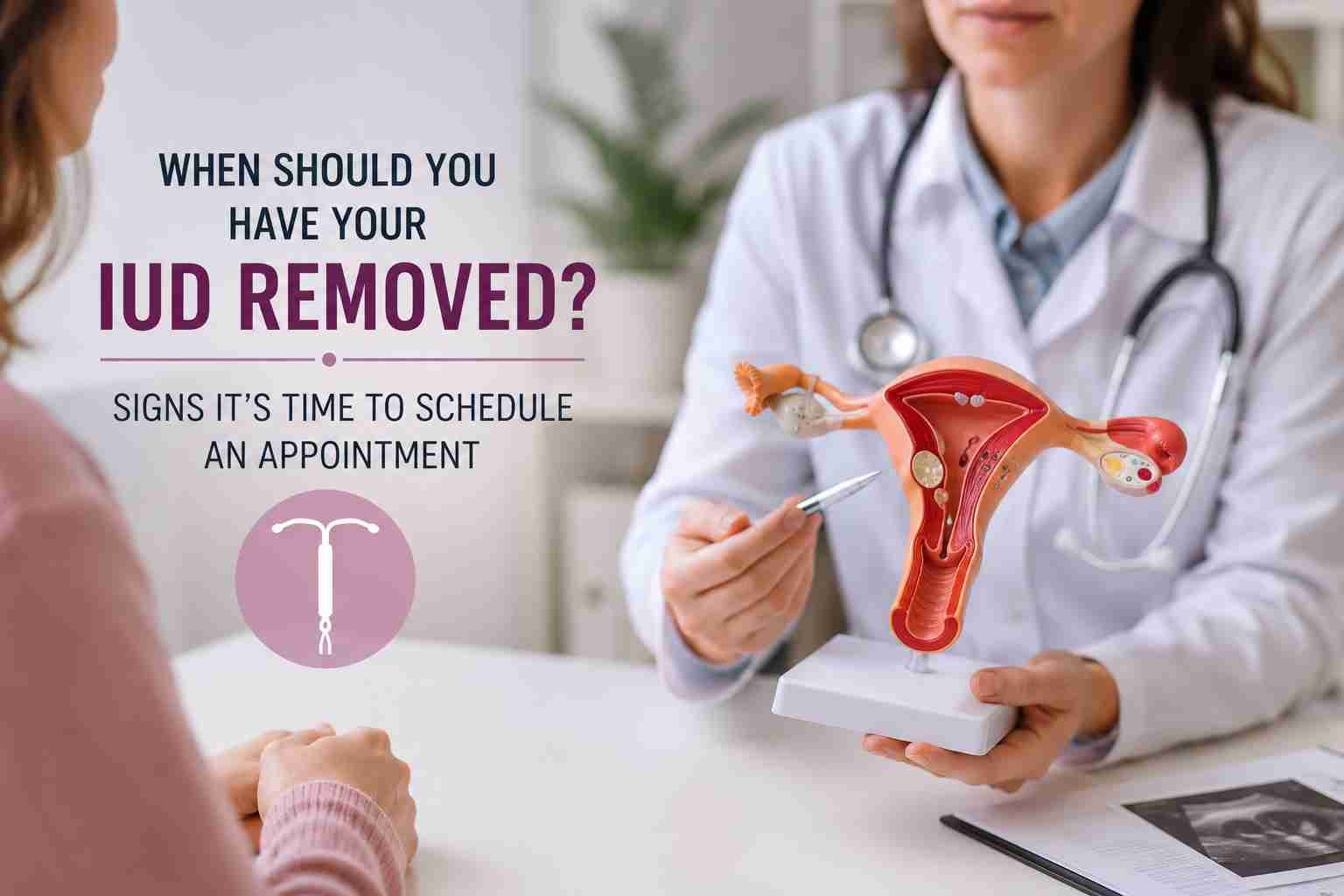
What Is an IUD, and When Should It Be Removed?
An IUD is a small, T-shaped device that sits inside the uterus to prevent pregnancy. Depending on which type you have, it may work anywhere from three to ten years. There are two main types:
- Hormonal IUDs , which slowly release a hormone called progestin to prevent pregnancy.
- Copper IUDs , which don’t contain hormones and instead use copper to make pregnancy unlikely.
Every IUD has an expiration date. Once it reaches the end of its approved lifespan, it should be removed or replaced.
Sometimes removal is planned. Other times, it’s recommended because of symptoms or changes in your health.
I always encourage my patients to keep up with routine gynecologic visits. Those appointments give us an opportunity to make sure your IUD is still in the right position and working the way it should.
Why Do Women Decide to Remove Their IUD?
Not every removal happens because something is wrong. Life changes. So do your healthcare needs.
Some of the most common reasons I remove IUDs include:
- The device has reached its expiration date.
- You’re planning to become pregnant.
- You’d like to switch to another birth control method.
- You’ve entered menopause and no longer need contraception.
- Your personal preferences or lifestyle have changed.
There isn’t a “right” reason to remove an IUD. The best choice is the one that matches your current goals and your overall health.
What Symptoms Should Never Be Ignored?
Most women do very well with an IUD. Still, there are times when your body is trying to tell you something.
Please schedule an appointment if you notice:
- Ongoing pelvic pain or severe cramping
- Heavy or unusual vaginal bleeding
- Pain during sex
- You can no longer feel the IUD strings, or they suddenly feel much shorter
- You think you may be pregnant
- Repeated pelvic infections
- The IUD seems to be slipping out
- Your periods become much heavier or more painful than before
These symptoms don’t always mean there’s a serious problem. But they deserve an evaluation. Sometimes the IUD has shifted slightly. Occasionally it may partially come out of the uterus. In other cases, your symptoms may be caused by an entirely different gynecologic condition. The only way to know for sure is to be examined.
Does IUD Removal Hurt?
Let’s be honest. This is probably the question patients ask me most. The answer surprises many women.
For most people, removal causes only brief discomfort. You may feel:
- A quick pulling sensation
- Mild cramping similar to a menstrual cramp
- Pressure that lasts only a few seconds
Then it’s over. Everyone experiences pain differently. Women who have never delivered a baby, have a tilted uterus, or have pelvic pain conditions may notice a little more discomfort. If you’re nervous, tell your doctor ahead of time. Sometimes taking an over-the-counter pain reliever before your visit can help. Taking slow, deep breaths during the procedure also makes a difference for many patients. Severe pain isn’t expected. If discomfort continues long after the appointment, you should contact your gynecologist.
What Happens During an IUD Removal Appointment?
Many patients imagine the appointment will be complicated. It usually isn’t. Here’s what typically happens: First, I’ll perform a pelvic exam. This allows me to see the cervix and locate the IUD strings. Next, the IUD is removed. Using a small instrument, I gently hold the strings and slowly pull the device out. As it comes through the cervix, the flexible arms fold upward naturally. The removal itself often takes less than a minute. Then comes recovery. Most women rest for a few moments, get dressed, and head home shortly afterward. Many return to work, run errands, or continue with their normal day.
When Is IUD Removal Surgery Necessary?
Fortunately, surgery is uncommon. Still, there are situations where a standard office removal isn’t possible.
This can happen if:
- The IUD strings can’t be located.
- The device has become embedded in the uterine wall.
- A previous removal attempt wasn’t successful.
- Very rarely, the IUD has moved through the wall of the uterus.
If this happens, don’t panic. We often begin with an ultrasound to locate the device. Depending on what we find, removal may be performed with ultrasound guidance or through a procedure called hysteroscopy. During hysteroscopy, a thin camera is inserted through the cervix so the IUD can be seen and safely removed. Although hearing the word “surgery” can sound frightening, these procedures are generally very safe when performed by an experienced gynecologist.
What Should You Expect After Your IUD Is Removed?
Recovery is usually straightforward. It’s common to experience: Light spotting Or Mild cramping, Temporary changes in your menstrual cycle, These symptoms often improve within a day or two. One thing I always discuss with patients is fertility. If you’re hoping to become pregnant, fertility can return very quickly after IUD removal. Some women ovulate within weeks. If pregnancy isn’t part of your plan, it’s important to have another birth control method ready before the IUD is removed.
When Should You Call Your Gynecologist Right Away?
Most women recover without any problems. Still, there are symptoms that shouldn’t wait.
Please contact your healthcare provider if you develop:
- Heavy vaginal bleeding
- Fever or chills
- Severe pelvic or abdominal pain
- Foul-smelling vaginal discharge
- Symptoms that continue getting worse instead of improving
These signs could point to an infection or another complication that needs treatment. If something doesn’t feel right, trust yourself. I’d much rather evaluate a patient and find everything is okay than have someone stay home worrying.
Why You Should Never Remove an IUD Yourself
Every now and then, a patient tells me they watched a social media video showing how to remove an IUD at home. Please don’t. Trying to remove your own IUD can lead to:
- Injury to the uterus or cervix
- Infection
- Bleeding
- An incomplete removal
- Significant pain
Professional removal is much safer. It also gives us a chance to answer your questions, discuss future birth control options, or help you plan for pregnancy if that’s your next step.
My Advice
An IUD is an excellent form of long-term birth control, but every device eventually reaches the point where it should be removed or replaced. Whether your IUD has reached the end of its lifespan, you’re thinking about pregnancy, or you’ve started noticing symptoms like pelvic pain or unusual bleeding, don’t wait until you’re uncomfortable or anxious. A simple office visit can often provide the answers you’re looking for. If you live in the Chicago area and have questions about your IUD, I’d be happy to talk through your options with you. Together, we’ll decide whether it’s the right time for removal and make sure the process is as comfortable and safe as possible.
Frequently Asked Questions
How do I know when it’s time for my IUD to be removed?
Schedule an appointment if your IUD has reached its expiration date, you’re planning a pregnancy, you’re changing birth control methods, or you’re experiencing symptoms like pelvic pain, heavy bleeding, or changes in the IUD strings.
Is IUD removal painful?
Most women feel only mild cramping or brief discomfort. Severe pain is uncommon and should be evaluated by your healthcare provider.
How long does an IUD removal appointment take?
The removal itself usually takes just a few minutes. Most office visits are completed within 15 to 30 minutes.
When is IUD removal surgery needed?
Surgery may be recommended if the strings can’t be located, the IUD is embedded in the uterine wall, or a routine office removal isn’t successful.
Can I get pregnant right after my IUD is removed?
Yes. Fertility often returns very quickly after removal. If you’re not planning a pregnancy, discuss another birth control method with your gynecologist before your appointment.